Sunday, 22 February 2015

My final evaluation for my whole Location project..

My evaluation for the second unit of level 5
The second unit of this year holds the title of 'Locations', the project has been split up into two sections or briefs to be precise.
A self initiated brief that we wrote up ourselves, a project I based on the word 'locations' and what that means to me, the idea of home, something close to heart, and what a more perfect idea than focusing this part of my unit on the beach, or what components make up the beach to be more particular. The second part of this unit is a live brief working along side a weave based design partnership called 'Wallace and Sewell' a company situated in the heart of London.

To say that this unit has been a simple one, would be very false, having two projects on the go at once has been a big challenge for me, managing my time for this task hasn't been as successful as I would have liked it to be, I felt I had a lot of things to do in the last few days leading up to the deadline, maybe things I could have prevented having to do if I had maneged my time better, by having gone through this procedure, I have learnt by my mistake and know that next time I need to start planning, researching and getting stuck into something as soon as its necessary.

I am very pleased with how the project finally pulled together and how my final outcome has been presented. I feel a lot more confident in myself, especially when it narrows down to the technical side of both projects, not only moving forward by going from a hand controlled table top loom to a floor electronic loom, I am now able to comfortably use the electronic floor loom along side mastering a number of new structures to weave.
I am pleased with feeling more content about my place on the course and looking forward to facing lots more challenges over the next few months.

I enjoyed working in a slightly different way than to what I was used too, for both briefs in this unit I began by taking time out to do some thorough research, this allowed me to get a good body of work together before I started anything more practical.

Moving on from my research, I then had an equal amount of time on my two projects, when all of the research was fresh in my mind, drawing from my groundwork was very important, this was the area of my work that I continued to develop all the way through the projects.
Both projects consisted of two completely different outputs of drawing, mark making and development work but all very highly valued to keep working on my project. The most important reason for me doing this was so I could refer back to my work to start producing my samples. By doing this I had allowed myself to be able to choose the most suitable yarns for both my warp and my weft for the two individual projects.
I also took part in a three week Illustrator workshop, a very exiting yet challenging task as this was a programme I hadn't ever used before, along with Scott weave sessions and a number of drawing tasks I gave myself.

Something I told myself I would like to do more of in this project was in depth artist research, so as I mentioned earlier on this was the first starting point for me.
For my Wallace and Sewell brief I looked very closely at Guy Rose and his painting work, his painting 'Poppy field' had inspired my colour pallet the most for this area of my work, I had also looked up a little bit about Paul Cezanne and his painting 'small forest'.
For my self initiated brief I looked at not only artists, but practitioners and designers too, the work by Richard Long, Sue Lawty, Poppy Binns, Jessica leclere, Juliette Hoffman and Zoe Howarth all inspired my depth of this brief.
The sampling part of both projects was my favourite as I was knee deep in new experiments, keeping my artist research close to mind as well as my own drawings and development I was highly satisfied with each and every outcome.
Both warps that I made were 6 yards long and 10 inches wide, my Wallace and Sewell brief was made up of red, blue, jade green and marine green 2/16s cotton and the self initiated was a plain cream wool yarn, I threaded them both up across 16 shafts, and on a block point threading.
I choose to do two completely different types of warps and selection of yarns for my two individual projects because I wanted two diverse outcomes, my cotton samples are flat and pressed, my woollen
samples chunky and textured both to link in with my brief.

The part of the unit that hasn't worked so well for me is the computer based work, including Illustrator and Photoshop, I found both of these programmes very difficult to get my head around, that is the reason for the lack of work in this specific area, and not fully completing this task another section I also found difficult as I have already mentioned was my time management, but by struggling with this, I know no what I will do to change this for my next brief.
If I could do this project again I would like to build up a better weave structure plan and work more on Scott weave so that I continue to build on my technical file and technical weaving sample structures. I would also like to challenge myself to working on a bigger scale again as that is something I have missed during this unit.

I am pleased with how I pulled things together by the end of this unit and look forward to taking part in a new challenge for Unit X as i have chosen the Pass it on, educator brief.


Sunday, 8 February 2015

Jenny Jones Interior Designer..

Julie Jones is a interior designer. She focuses her practise on home weaving designs such as rugs and blankets, she has been the final inspiration for my own practise as this is where I can see this particular area of work following in the same direction as, I can see a lot of the same techniques and qualities as my own body of work.
I chose the below three images out of her collection because I was inspired by her marks and colour choice as they were very similar to my own. I like to make sure that all of my work links one way or another.

Finalising everything..

After I completed my designs for the self initiated brief, My second to last step was to wash them, by doing this the fibres will close together so that after the sample was dried I would have a  more solid fabric, also by doing this and leaving my samples to dry, the yarn that I had used would change my samples to a range of different kinds of forms so that they looked completely different than they did before I washed them, giving the samples much more of a structure to relate back to my artist research work.

The two images below are my final weaved collections, the context I have explored here is interior, and a range from that. The focus of my study will be blankets and throws.

Weave week two..

This week was my final week of weaving for the Location Unit, but as Ive chosen to do the Pass it on-Educator brief for UnitX, it could be my last week of weaving for level 5 too.
This week I started off by doing some research into what kind of structures I might like to do, I focused a lot on the honeycomb weave, spiderweaving and M's and O's, three structures that I hadnt tried out before.
The picture here below is a collage of the final weave I made this week along with the two photographs I took and was working very closely with to design this weave, by focusing on certain areas of each picture, I was able to unpick colours, shades and tones, to work out what kind of yarns I would need and structure I would choose, as we can see, here I chose to design a both honeycomb and M's and O's structure running along side each other to link in with the marks from my own photographs. I am very pleased with how this week went to plan, I manged to get five very highly developed samples from my warp all with a link to either a piece of my own work or some of my artsist research work.  


Monday, 2 February 2015

Weave week one..

This first week of weave for my self initiated brief was the most important starting point, began the week by getting my warp onto the loom and choosing a define colour pallet in a variety of different types of yarn to weave into the weft of my samples. I had to programme in the number of structures that I wanted to create for my samples this week so that I was organised and knew what I was doing. 
I eventually managed to get two samples done, for the two samples below, I used three different shades of  brown 2/16s cotton, four different shades of green 2/16s cotton, a cream and grey mohair, and a cream, brown and muddy green woollen yarn all for the weft. This week I focused on two structures they were a plain weave structure and a structure that leaves a little float on the top of the surface called M's and O's, I had never tried this pattern before and was a comfortable starting point to try something knew.


My drawing and development work..

Before I start to weave a collection of samples for my self initiated brief, drawing and development of my project is very important, it is almost vital that I have a body of work to look back on whilst I am weaving on the loom and designing my ideas, so I know exactly what colour choice I am using, I want to really explore into the most suitable yarns for this project, that would really suit my type of work in the best way.
Because all of the artist and designers that I have researched about have a very textured style of work, I have made the final decision that mohair and wool yarns will be what my samples are made up off, because of this choice this also relates back to my drawing work, the style I will create here will also be very textured, loose, woolly, something to touch/feel, jaggered edges and a little bit of a rough look.

The warp for my loom is just going to be in a very simple cream thick wool yarn, the reason for this choice is so I can bring all my excitement into the weft, and have a solid warp as my starting point.

The colours that I am going to use for my weft are, brown, green, cream, grey, blue and white, I will use a variety of different shades of these colours when choosing my yarn to create different shades, shadows and tones, the yarn that I will use will be mostly wool and mohair, but I will have some areas of a 2/16s cotton to create more define and delicate areas, by using a wide selection of yarns, I would like to create more depth of my samples, so that each section will relate back to either a part of a drawing or another part of my photos, by looking back on my artist research this will also influence what yarn type, what colours and what patterns I will use.  
 
The structures I am going to use are going to be, plain weave, twill, honeycomb, M's and O's, spider weaving and a weave that can really bring my weft to the surface.

Monday, 26 January 2015

Sue Lawty

I also found another artist called Sue Lawty when I was researching about Polly Binns, I automatically fell in love with not only her loose weave samples but her style of mark making and development work too.
Her style of work was the most like mine compared to any other artist that I had found, I love her ideas behind her marks and drawing, and way that she interprits her thoughts into pieces of creations on paper.
Her media that she uses is all my own favourite kind to use, I really felt that I could relate to all her style of working, one inparticular body of work that I came across had a substancial use of pebbles,  
As well as the hands on work within her practice. I also came acroos some of her photography from a number of locations that she works from herself, just as I have done for my own project, I really liked how all of my artsists that I have researched upon are following the same kind of pattern and routine by the way that they are working. I feel that I can really relate to there practice, especially because they take photographs of there locations and go back to work on them later on.


Wednesday, 21 January 2015

Polly Binns

After my museum and gallery visit day, I left with excitement, having been so inspired I wanted to seek more and more information and ideas for my project, before I started on my own work properly, I decided to look up an artist that worked abit more with mark making work that I could be inspired to do the same as, as well as internet research and my weekly tutorial I came across an artist called Polly Binns, that Lesley had also mentioned to me, I found her Norfolk beach work in particularly extraordinary because the same as Richard Long her artwork began at many different locations, Places were her work could be spread out and really had the potential to be on a crazy scale, but then looked at much closer and unpicked to make the most beautiful and delicate samples.
 
 
 The sample below is my favourite sample by Polly because I feel that not only the choice of colour work but the pattern aswell links in with her project perfectly, I adore how delicate the same looks and how much time she must have taken out to create all of her samples.


Monday, 19 January 2015

A day of Inspiration..

Today I visited both the Manchester museum and the Manchester Art Gallery.
I wondered around a variety of different exhibitions, absorbing the information that was in front of my eyes, I thoroughly enjoyed taking time out to look at all of the work.
The best part of the day for me was In the Manchester museum, I was extremely inspired by one section in particular, this was the shells, fossils, crystals and minerals area.
As my project is based a lot around this kind of work, to see the actual objects in front of my eyes gave me a lot of ideas for the rest of my own practice. 
The shapes, the curves, the dents and the formations of each and every object have given me a lot of motivation to now go away and draw from exactly what I saw, taking photographic evidence is also a brilliant way for me to look back on what I discovered today. 
It was really interesting to see that the museum took a different kind of approach to its exhibitions by having a hands on attitude to the artwork, I was able to have a real feel of the shells which gave me a better idea of the kind of what kind of work I would like to do, an example of this is to have very vibrant and wild drawing work along side the most textured and experimental work that I have ever done.  


Juliette Hoffman

The second designer I found was called Juliette Hoffmann,the kind of work that she creates is just incredable. I love the subtle yet sophisticated colour combinations as well as the stunning textural fabric surfaces that she has decided on. Each piece of her work is bursting with excitment and unexpected forms, with so many unique qualities, her work really inspired me with not only my own colour pallet but for my drawings and mark making work too. Whether its through the use of floating yarns, the structures created by the knit pattern or the unsual placement of pleating, her work is just devine in every single way, her individual touch to her pieces is another quality that I would also like to add into my own project.


Jessica Leclere

As Im doing a textile course, I concider it important to find some kind of designer as well as just a bunch of artists.A designer that uses yarns and turns them into some kind of fabric or creation whether this a piece of work or a sample just like I would be doing.
I came across a designer called Jessica Leclere, she is a knitter, even though she is practicing something very different to me, I was extremley drawn into her way of working, I love her 3D structured forms made entirly of a wide veriety of yarns and embelishments, this a kay factor of something I would like to inlcude in my own work.
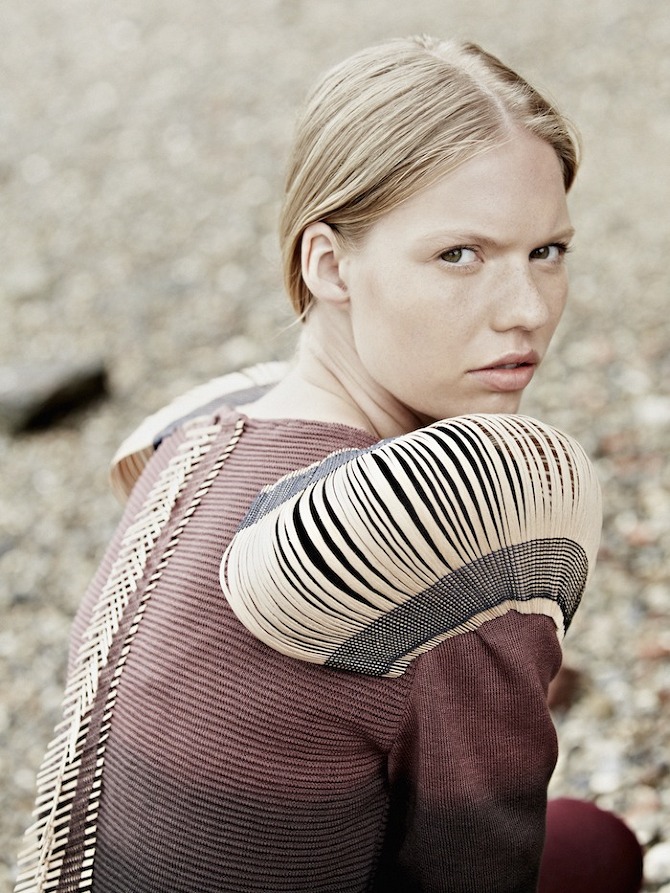
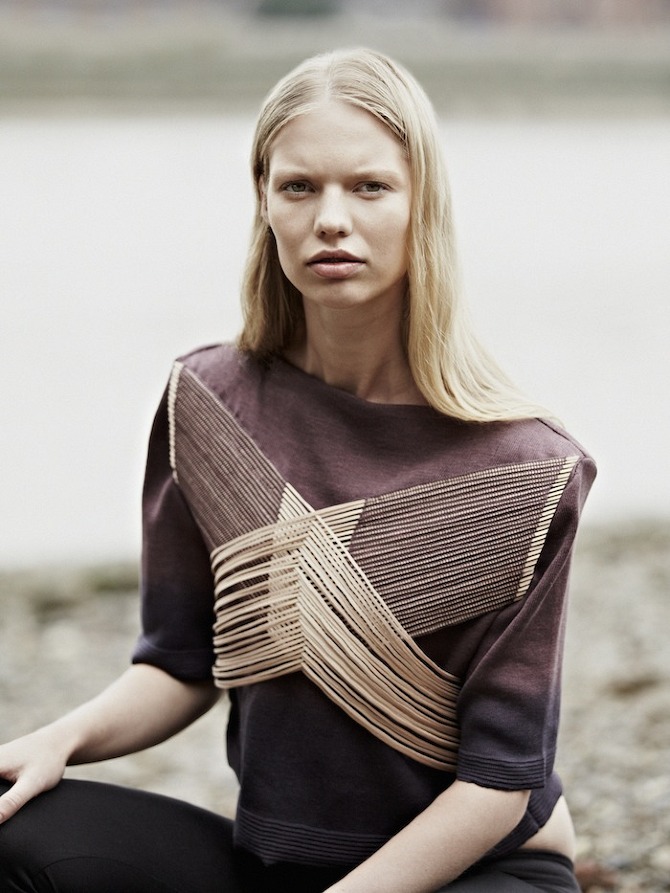
I think her fashion peices look very similar to shells and muscles all components that can make up a beach location. Her ideas and her very own insperation is something I myself would like to really include in my own project. My favourite part of Jessica's work is the yarn that she uses to sculpture together her designs, the choice of yarn that she has carefully thought about and chose to finilise the most unique and striking pieces of textile fashion work.
Her eye catching samples are what I want people to feel about my own work.                                                                                                                   

Richard Long

I then decided I was going to go back on my journey and look more at the artsist that first gave me my ideas and insperation, this was 'Richard Long'. 
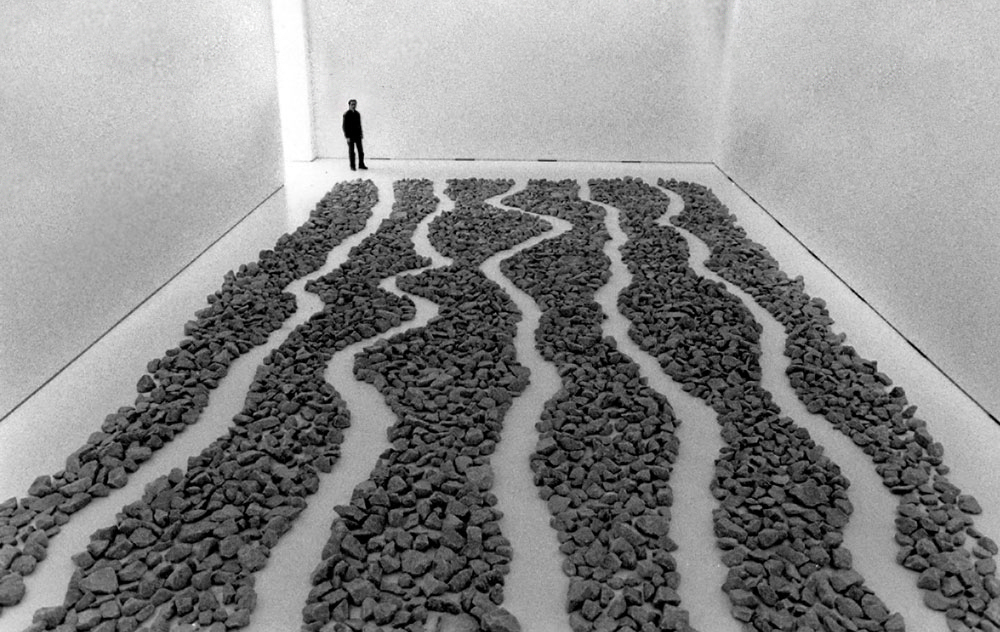
The style of artwork that he created was on a massive life size scale, his kind of media or material was something I myself would never think to include in my own work, he uses lots of natural objects and open space (a space with a different location), he then photographs his work in a way that his audience can get involved in.
 I was inspired by Richard Long because I loved the way my mind went wondering when I look at his work, so many ideas and thoughts can come from just one piece, my imagination goes wild from his art work. I like the personal feelings behind his work, which was something I was trying to petry also.
   Another reason why I also fell in love with his work was because they were all captured in       
   different locations, this can involve the main structure to my brief, the idea of this fitting in very
   nicely with my own project.
   I also chose to look at Richard Long's work because one of his main objects that he used to create
   his work was stones, pebbles, rocks and sand, as you can see with the three images below, these 
  four components are what my very own project is going to be all about, his idea of media, space 
  and arrangment are three things that im really going to take on board for my own work.


The start of my artist research.. Zoe Howarth..

After weeks of researching what 'Locations' means to me,my next step is to do some artist research so I could start to build up my project, The photos I took from the beach were a brilliant starting point because now I didnt only know what kind of artists I was looking for but I was able to start a colour pallet for myself and begin a pattern and structure plan.
When researching I came across a practising artist like myself called 'Zoe Howarth' as she might not be well known at this point, I found her work very insperational for my own project.
She also had a blog exploiting her images, writing, ideas and imagination of ideas very similar to my own.
I became very intrigued by how she produced her work and felt myself wanting to look much deeper into her work to see how she designed and created not only her sampling work but her drawing and mark making develpoment work too.
Her own spesilism was also weave just like my own  which made this a lot easier to dive into her style of development work as it was also structure and pattern based just how mine was going to be.


Sunday, 11 January 2015

The start of my self initiated brief..

Its always a good idea as a starting point for any new project to carry out some thourough research.
One of the best ways that I personally find helps me to do this is to brain storm, draw out a spider diagram of ideas and see where my imagination can spiral off to.
I started off by going to the libary and taking out some books that follow by the title of 'Locations' to see if this gave me any other kinds of insperation, none of the books were of any interest to me as they were'nt quiet including the types of things that I had in mind. The second plan of action was to then go away and do some internet research maybe artists that had the same ideas or were involved in similar projects, this was when I first came across Richard Long and his location work involving natural objects. I became automaticaly inspired by his work and this gave me the final idea of doing a project all about 'being close to home.'
From this the main task that I wanted to make sure I had to do over my Christmas break was to decide on a project title, the first thing, I did was ask myself, what does 'Locations' mean to me? I see the word locations meaning a a personal place to each and every person, I decided to look at my very own location, the main place I call home, the little town in North Wales, called Llandudno, a town full of life situated in the middle of two beautiful beaches, here there would be lots of opportunity's to take some great photos for my project, I didnt just want to take the average boring landscape picture of a typical British beach, so I decided to look much further in, and focus more on what makes up the beach, just like my original thought of 'what makes a location..?' A project all based on natural objects bursting with vibrant colours and exitment all focusing on the idea of something being close to home.
I went on a number of diffrent kinds of walks during my three week break, by the end I had unpicked exactly what I wanted to base my project on.
The cold sea water brushing over the rocks and pebbbles, the decay that has left the shiny wet rocks stay put in the grainy sand, seaweed, muscles and shells so pretty sparkling the day light, my ideas were now starting to come together.